What If AI Becomes the Best Thing That Ever Happened to Bad MarTech?
By Henry Hernandez Reveron
We’re in the middle of a second great re-platforming of customer and marketing operations. It’s being sold as inevitable: AI, agents, orchestration, composability, the new stack, the new operating model. And to be clear, I’m not anti-AI. I’m not nostalgic for the old days of duct-taped campaigns and brittle integrations either.
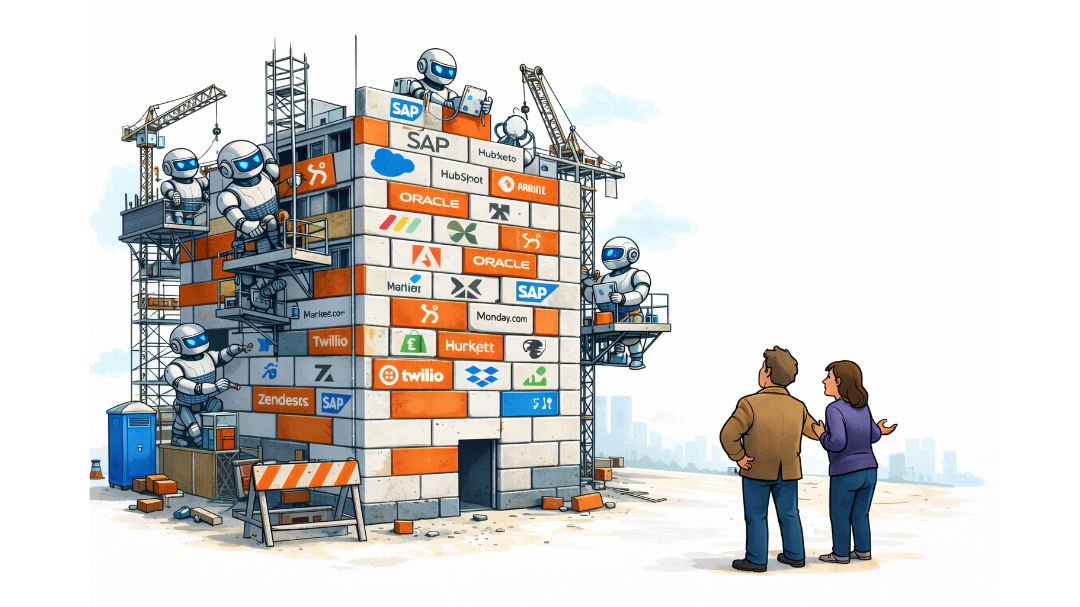
But I am deeply concerned that we’re about to spend more money than we did in the last decade of MarTech expansion and end up with something that looks extraordinary on an architecture diagram while producing the same outcomes we quietly tolerate today.
That should scare us.
Because this time, the systems won’t just be messy. They’ll be sophisticated. They’ll be autonomous. And they’ll be fast.
And if we automate the wrong thing, we won’t merely repeat our mistakes; we’ll scale them.
The uncomfortable possibility: sophisticated nothing
Here’s a scenario I can’t shake:
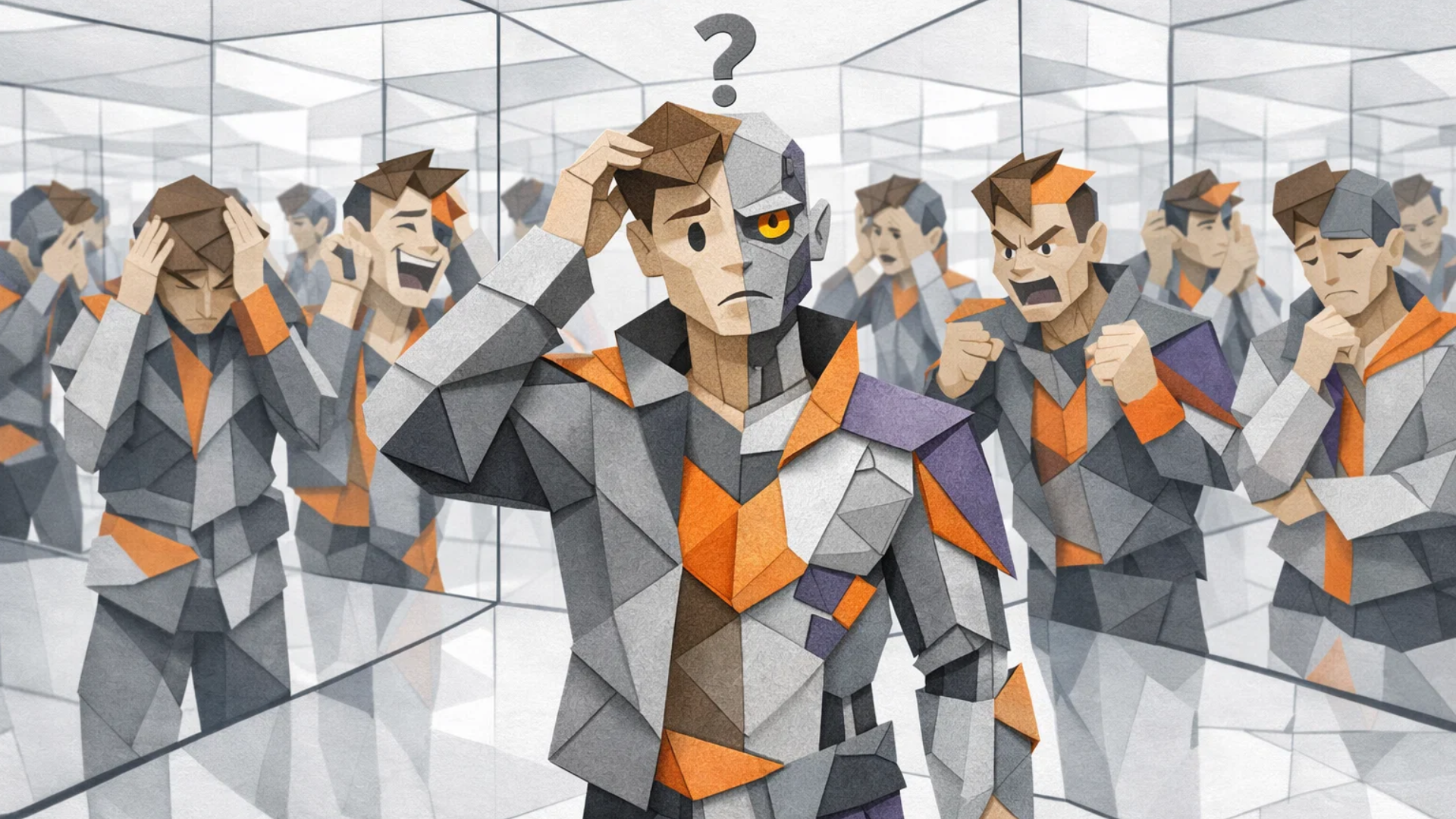
In a few years, we’ll have fleets of agents generating content, optimising “journeys,” segmenting audiences, resolving service intents, launching offers, closing tickets, updating profiles, and routing work across the enterprise. Dashboards will glow. Tickets will disappear. Velocity will look fantastic.
And customers will still be stuck in the same loop:
- Repeating themselves across channels
- Getting “personalised” messages that don’t help
- Being asked to do unnecessary work to correct our systems
- Being trapped between departments that “don’t have access”
- Losing trust because the organisation feels like a machine trying to extract value rather than deliver it
If that happens, we won’t call it failure right away. We’ll call it “adoption.” We’ll call it “transformation maturity.” We’ll call it “change management.”
But it will be failure. Just… efficiently delivered.
And this is the part that keeps me up:
The risk isn’t that we’ll build the wrong systems. The risk is that we’ll finally build the perfect systems to produce the same disappointing outcomes faster, cheaper, and at a scale that makes failure harder to see until it’s irreversible.
Why this wave is different
The last era of MarTech wastage had a particular shape: an explosion of tools, overlapping capabilities, and integration debt. We all know the story. The stack grew faster than the operating model could absorb it.
This wave is different because AI changes the economics of motion. Agents can create activity at near-zero marginal cost. That means you can get an extraordinary amount of output without ever answering the foundational question:
Output of what, for whom, and to what measurable end?
When the cost of production collapses, the discipline of intent becomes the limiting factor. If you don’t have intent, you fill the vacuum with proxies: clicks, opens, engagement, MQLs, “next best actions,” “optimised journeys.”
Agents will win those games. Customers may not.
What AI is really exposing
There’s another reason this moment feels unstable, and it has less to do with AI “replacing jobs” than it does with AI revealing a structural truth:
MarTech didn’t grow up as an architecture. It grew up as a shopping list.
A vendor-shaped ecosystem of categories, connectors, dashboards and workflows assembled around procurement, campaigns, and quarterly goals; not around a coherent model of customer interaction, consent, continuity, and measurable outcomes.
AI is a stress test for that reality. It routes around shallow product differentiation. It compresses the value of “UI over workflow.” It makes it obvious which systems are durable primitives… and which ones were always thin layers of convenience.
And that matters because when the foundations are shaky, adding autonomous capability doesn’t create stability; it creates acceleration.
The dangerous distraction of the “Saaspocalypse” narrative
There’s also a convenient story the industry can tell itself right now.
The “Saaspocalypse” narrative is seductive because it gives us a villain and a headline: vendors collapsing, categories imploding, tools becoming obsolete, consolidation wiping out the long tail. It turns a messy transition into a simple plot.
But it’s also a dangerous distraction.
Because it frames the crisis as a vendor problem when the deeper issue is an operating model and design problem.
If we make this about which platforms survive, we’ll spend the next few years doing what we always do under pressure:
- Rationalising stacks
- Renegotiating contracts
- Swapping vendors
- Re-platforming again
- Re-labelling the same capabilities with new names
Some of that may be necessary. None of it guarantees outcomes.
In fact, the “Saaspocalypse” story can become an excuse to avoid the uncomfortable questions. It encourages an inward, procurement-shaped urgency: move fast, consolidate, standardise, pick the winners.
Meanwhile, the customer still repeats themselves. Consent is still treated like a legal layer. “Personalisation” is still often irrelevant. And the enterprise still can’t answer, with clarity, what happened, why it happened, and what it cost the customer.
And here’s the real risk: while we’re fixated on the vendor landscape, we quietly accept a transformation that is mostly about internal efficiency. We build systems that talk to each other beautifully, run by agents that never sleep, optimising metrics that look good on slides… while customer reality remains unchanged.
“Saaspocalypse” panic makes it easier to ship the wrong thing quickly. It gives cover to action without clarity.
So yes, some SaaS products will be routed around. Some will die. Some will consolidate. That’s not nothing.
But if we treat that as the story, we will miss the more consequential one:
We’re not at risk of losing tools.
We’re at risk of building a new machine that can do everything except deliver better outcomes.
The "thing" we keep leaving out
We keep building inward.
We talk about stacks. Platforms. Workflows. Orchestration. Governance. Integration. Copilots. Agents. Operating models.
All important.
But the most important element keeps getting treated like an externality:
The Customer’s cost of interaction, effort, friction, trust, and recourse as a first-class design constraint.
Not as a slogan. Not as a brand promise. As an engineered constraint.
If the new transformation doesn’t materially reduce customer effort, increase clarity, and build trust in the moments that matter, then what are we doing?
Because a world where agents run everything is a world where the customer experiences your organisation as a single continuous system whether you intended it or not. And that system can feel either helpful or predatory.
Automation doesn’t just scale capability. It scales tone. It scales mistakes. It scales disrespect.
Five questions we should be asking right now
If you’re leading or influencing this transformation, here are the questions I’d want to see on the table before we congratulate ourselves on “progress”:
- What are our customer outcomes, expressed at the encounter level?
Not “journeys” on a wall. The measurable definition of “better” in each meaningful interaction: time-to-outcome, error rate, recovery time, customer effort, trust signals. - What is allowed to carry over from one encounter to the next, and what is not?
If continuity exists, it must be consent-scoped and explainable. Otherwise, you’re building an experience that feels like surveillance. - Can we explain why the system did what it did?
Not “the model recommended it.” Explainable to an operator, defensible to risk, understandable to a customer. - How does a customer correct us when we are wrong?
Recourse isn’t a support channel. It’s a product feature. If customers can’t correct the system, the system will eventually betray them. - Are we optimising proxies or reducing real customer cost?
If the primary measures of success are internal throughput and marketing outputs, agents will produce impressive vanity gains while trust quietly erodes.
None of these questions is glamorous. They don’t sell software. They don’t make for exciting keynote slides.
But they are the difference between transformation and expensive self-deception.
The invitation
If you’re excited about the “new” stack, good. Be excited. But don’t sleepwalk into it.
Push for architecture that is anchored in customer reality, not internal convenience. Push for systems that are measurable in customer terms, not just operational terms. Push for enforceable boundaries: consent, traceability, accountability, recourse.
Because if we don’t, we will absolutely succeed at building the perfect system for producing the same outcomes: faster, cheaper, and at a scale that makes failure harder to see until it’s irreversible.

.png)
Join the next intake and start learning