
Popular AI Myths in the Customer World
By Aarron Spinley
There is no denying that the promises, and perhaps the threats, of the AI era should be taken very seriously indeed. Leaders like Sundar Pichai are on record, predicting that its effects will be more profound than the arrival of electricity. That’s quite staggering.
Professor of Computer Science at Stanford University, Fei-Fei Li, said: "The future of artificial intelligence is not about man versus machine, but rather man with machine. Together, we can achieve unimaginable heights of innovation and progress"
And yet, it is no exaggeration that most of the claims and projections as to AI’s effect on the management of customers are widely overstated or misdirected. Case in point, when promoting an event, a national marketing association said:
“The customer experience landscape is undergoing its most dramatic transformation in decades. As artificial intelligence takes over more of the customer relationship, traditional touchpoints are disappearing, and the familiar journey of steps, screens, and interactions is vanishing”.
If that reads like a brochure from a software vendor or consulting firm seeking to sew fear and doubt, or hype, to lean their sales pitch against, that’s because it is. If not directly, then indirectly, or both.
Most associations are funded, at least in part, through various commercial partnerships. There’s nothing wrong with this per se, but without careful governance, it can lead to these sales-inspired narratives being passed off as statements of fact. Sponsored events ensue, and as in this case, a colourful vision of the future – without any substance at all – is presented as if a default new reality.
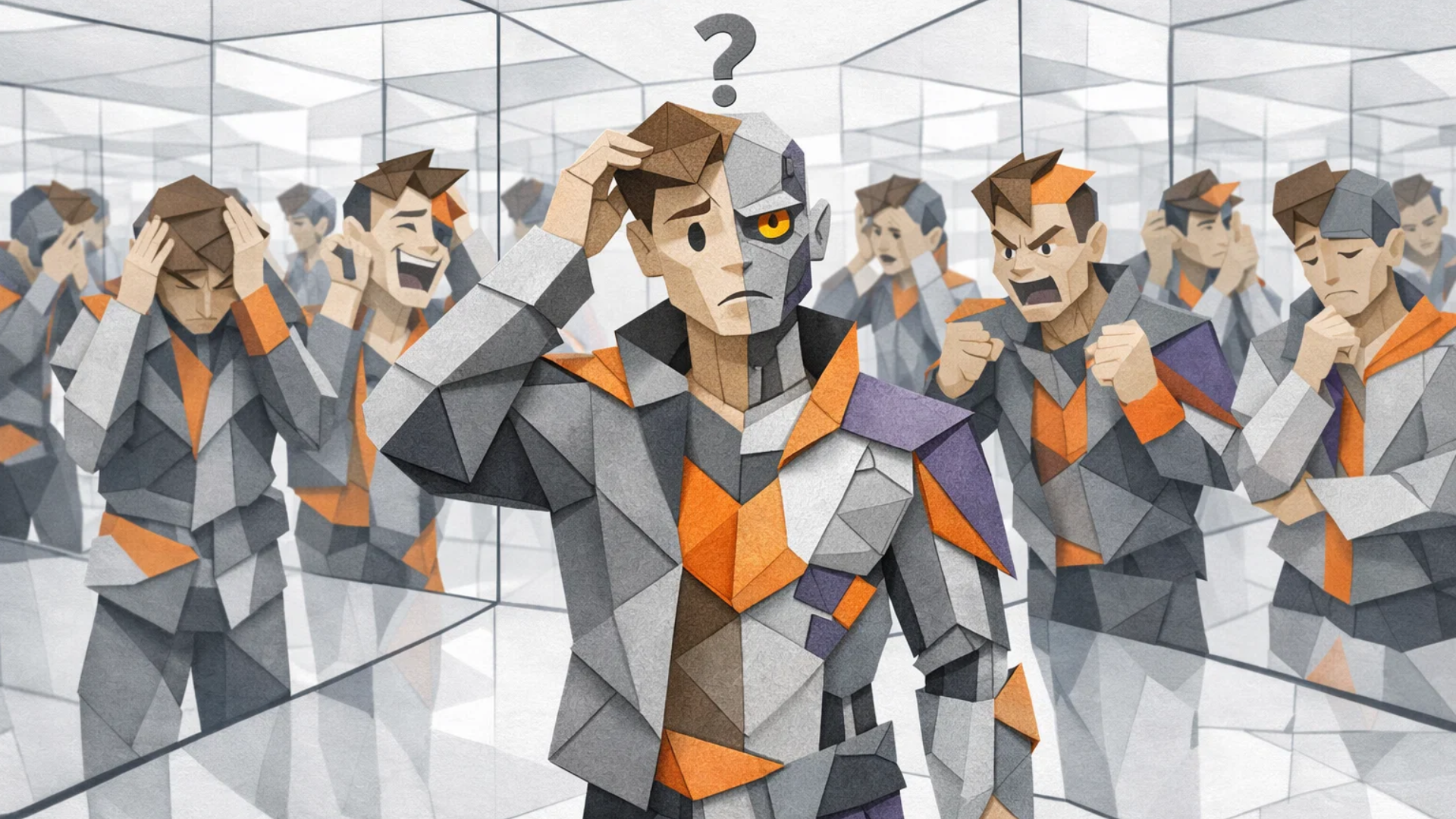
This illiteracy in the subject, so easily overtaken by the current hype surrounding AI, is a global problem. Those consumed by the tools, without a precise understanding of the job they might serve, tend to suffer this fate. It leads to a fetish for change, for disruption to something never understood to begin with, and for the endorphin release that stems from popular acts of imagination and cheerleading.
But the fundamentals, even those we rely on to assess the technologies of tomorrow, are firmly rooted in the lessons – and the science – established in the past.
Something Borrowed, Something New
In fact, the use of AI in the customer domain is not remotely new. Those getting excited about this “new frontier” benefit from a little history lesson, one that begins in the 1990s. This is when a company called Chordiant began applying complex decision capability to contact centres and CRM. Its foundation? Artificial intelligence and machine learning.
This complex decisioning would go on to become the foundation piece to more advanced journey orchestration in the early 2010s. In between, Chordiant was acquired by Pega, a name you’re more likely to have come across. Years later, as generative AI started sweeping the global consciousness from 2024 or so, the less informed have presumed that it’s all new and fan-dangled. Predictably, and perhaps with some connection, a range of vendors have re-branded themselves under the banner of ‘AI decisioning’, without even possessing the capability that defines it!
This reflects the wider consequence of unregulated product marketing, consumed by the largely untrained. Not untrained in the tech, though that’s usually the case too, but untrained on the customer base itself. In that way, the preoccupation with AI is more of the same, another distraction from what really matters. All in all, we’re about 3 decades into deploying AI in the management of customers at the time of writing. That’s the old. But we also have something new.
The arrival of bots and of agentic AI.
The service failures that accompany most chatbot programs should not have surprised people. This is what happens to any touchpoint that operates without being customer-context-aware, whether it has an “AI” label or not. We can resolve that – and in modules 6 to 8 of the Mini MBA in Customering students learn how.
On the other side of the bot coin, proponents of ‘shopper-bots’ claim that they will take over customer decisions. This analysis runs into serious flaws. Tested against the practical workings of core market concepts like mental and physical availability, these hyper-simplistic ideas run short of credibility. The bot apocalypse is about as likely as a zombie one, though we can expect some impact in certain low involvement categories, most probably.
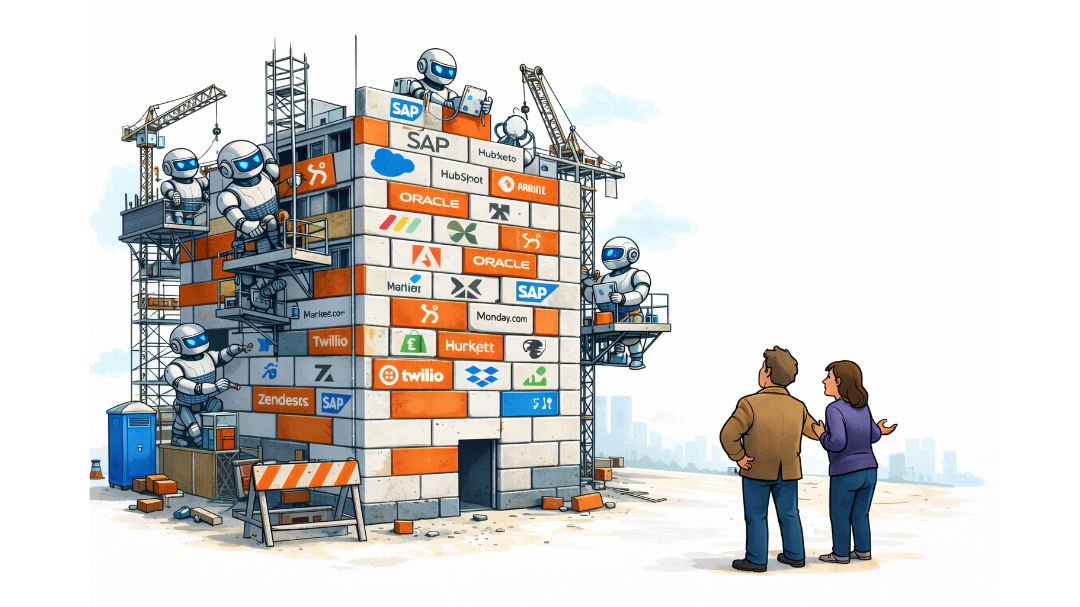
The other big claims centre on the use of agentic AI. Some have merit. But isolated and ungoverned touchpoints, a plague of the digital era, are already a significant source of corporate profit erosion. Injecting AI into the limb of a body is to extend the same calamity, but with potentially greater adverse outcomes. In fact, in many cases, that is certain.
The only exception to that is where orchestration capability is centrally applied, in which case, many of the excitedly proposed applications of agentic capability will quickly dissolve. And that takes us back to its origins in the 1990s and the subsequent evolution into orchestration.
So, yes, we have something old and something new.
But something that is even older than the tech, and long before AI's first forays into the customer world in the last century, are the management principles drawn from dyadic service and its economics. These were first detected in circa 3000 BC, and despite their vintage, they’ve been proven repeatedly as a pattern, including in the digital era. Without that, there’s no hope of understanding technology in the customer domain, AI inclusive.
Thus, beware technology analysts who aren’t first educated in the customer domain.
No Magic Bullet
Some who are reading this will know the critical theory, the economic precedent, the technological history, and its application against the empirically observed patterns of the customer asset itself. The vast majority, we must collectively accept, will not. And that’s the problem, because without a foundation of critical theory and experience in applying it, there is no hope of assessing any technological capability.
That leaves an industry, caught in a pattern of digital era hype cycles, to chase its tail.
We’ve endured over a decade that has seen trillions of dollars in corporate loss from this cycle of delinquency in customer management. One of the underlying contributors is failed transformation projects, and, as AI drives the next wave of these well-intended but rudderless endeavours, the root cause of those failures has not changed.
Therefore, neither will the outcomes.
AI is not reshaping customer management. There is no great recalibration, no revolution, and no dramatic transformation. Those who declare it so do not understand the status quo, let alone its path forward. Yet AI does offer significant promise. New applications. Enhanced modes of established methods or techniques. Much more.
But that promise must be measured with critical theory and by those who possess it. Until then, the losses will continue and ironically, so will the hype.
***
At Field Bell Institute, we counsel all parties to put the tools and toys down, to step back from the product marketing, and to obtain the essential and agnostic knowledge base of the domain.
.png)
.png)
Join the next intake and start learning